Why a Properly Sealed Canning Jar Can Still Be Unsafe to Eat
A jar that sealed properly, lid popped down and firm, feels like confirmation the canning worked, but seal formation and food safety are actually two separate things that can go wrong independently.
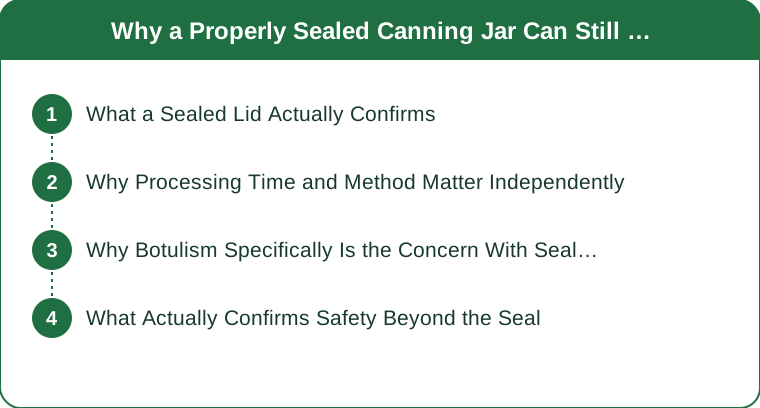
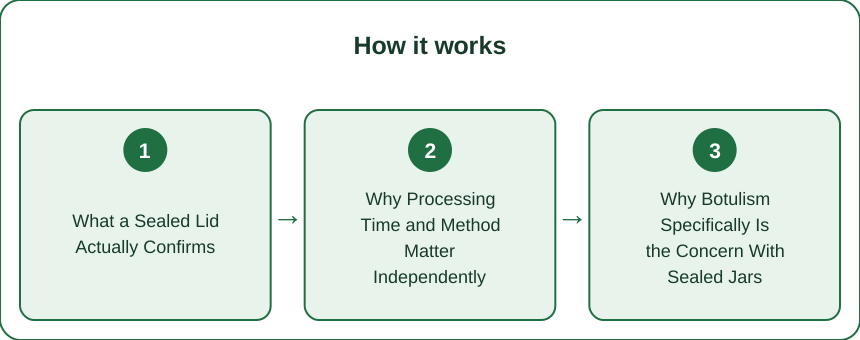
What a Sealed Lid Actually Confirms
The limited proof: a popped-down, firm lid confirming only that a vacuum formed during cooling, which happens whenever the jar’s contents were heated and then sealed properly, regardless of whether that heating was enough to eliminate dangerous bacteria.
Why Processing Time and Method Matter Independently
The separate risk: low-acid foods specifically requiring pressure canning at the correct time and pressure to reach a temperature that destroys botulism spores, a temperature that simple water-bath canning, even with a perfect seal, doesn’t reach.

Why Botulism Specifically Is the Concern With Sealed Jars
The specific danger: botulism spores surviving boiling water temperatures and then growing in the low-oxygen, sealed environment of a jar that wasn’t processed at pressure-canning temperatures, producing a toxin without necessarily changing the jar’s appearance or smell.
What Actually Confirms Safety Beyond the Seal
The real safety check: matching the food type, low-acid vegetables and meats specifically, to the correct method and tested processing time from a current, tested recipe source, since seal formation alone was never designed to signal that, and the frame (a sealed jar only confirms a vacuum formed, not that the processing killed dangerous bacteria — using the correct pressure-canning method and tested time for low-acid foods is what actually makes the seal mean something.)
A jar that sealed properly, lid popped down and firm, feels like confirmation the canning worked, but a popped-down lid only confirms that a vacuum formed during cooling, which happens whenever the contents were heated and then sealed, regardless of whether that heating was enough to eliminate dangerous bacteria. Low-acid foods specifically require pressure canning at the correct time and pressure to reach a temperature that destroys botulism spores, a temperature that simple water-bath canning, even with a perfect seal, doesn’t reach, and those spores can survive boiling water temperatures and then grow in the low-oxygen, sealed environment of an improperly processed jar, producing a toxin without necessarily changing how the jar looks or smells. Matching the food type, low-acid vegetables and meats especially, to the correct method and a tested processing time from a current, reliable recipe source is what actually makes a seal mean something, since seal formation alone was never designed to signal that the contents are safe.
Keep Reading
This article is for general informational purposes only and is not medical advice. Always consult a qualified health professional for guidance specific to you.