The Canning Safety Rule Most Beginners Get Wrong (and Why It Actually Matters)
Quick Answer: The most common beginner canning safety mistake is treating a sealed jar as proof of safety — a jar can seal properly and still harbor dangerous bacteria if the recipe’s acidity or processing time wasn’t correct, because sealing and safety are governed by two different things entirely.
Home canning has a reputation for being risky, and while it’s genuinely safe when done correctly, the confusion usually comes down to one specific misunderstanding.

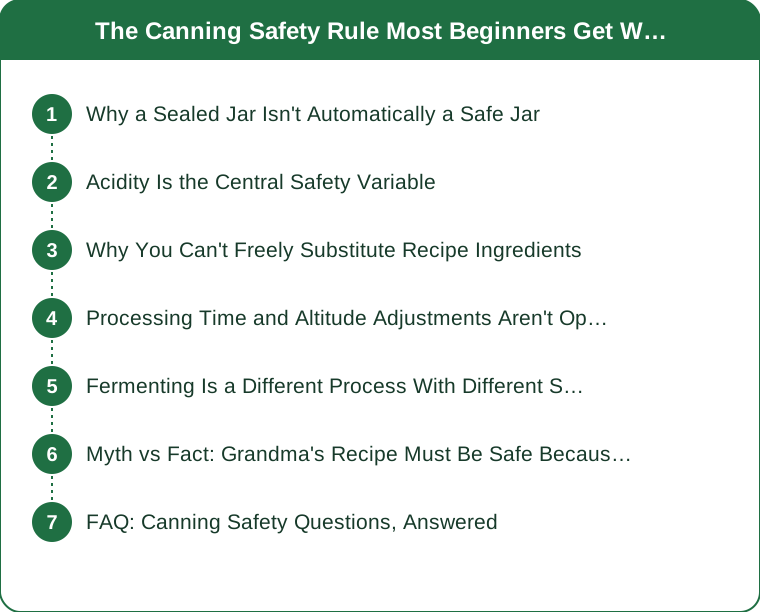
Why a Sealed Jar Isn’t Automatically a Safe Jar
The satisfying ‘pop’ of a sealing lid confirms that a vacuum has formed — it says nothing about whether harmful bacteria, particularly the one responsible for botulism, survived the processing. Seal integrity and food safety are determined by separate factors: sealing depends on proper lid prep and headspace, while safety depends on the acidity of the food and how long and hot it was processed. A jar can seal beautifully and still be unsafe if the recipe’s acid level or process time was wrong for that specific food.
Acidity Is the Central Safety Variable
Foods are broadly split into high-acid (tomatoes with added acid, fruit, pickles with enough vinegar) and low-acid (most vegetables, meat, poultry) categories, and this distinction determines which canning method is safe. High-acid foods can be safely water-bath canned, but low-acid foods require pressure canning, because only the higher temperatures a pressure canner reaches are enough to destroy botulism spores. Water-bath canning a low-acid vegetable, even for a long time, does not reach a high enough temperature to make it safe — this is the single most consequential mistake in home canning.
Why You Can’t Freely Substitute Recipe Ingredients
Tested canning recipes are calibrated to a specific ratio of acid, sugar, and processing time, and changing the ratio — even by adding ‘a bit more’ of a low-acid vegetable to a tested recipe — can shift the overall acidity enough to make the processing time insufficient. This is different from regular cooking, where substitutions are usually harmless; in canning, sticking closely to a tested recipe from a reputable source (extension office publications, established canning guides) is a safety requirement, not a suggestion.

Processing Time and Altitude Adjustments Aren’t Optional Details
Processing times in tested recipes assume sea-level altitude, and higher elevations require longer processing times because water boils at a lower temperature there, meaning the food doesn’t reach a safe temperature as quickly. Skipping this adjustment is a common oversight for canners who move or travel to a higher-elevation location and don’t realize their usual recipe needs modification.
Fermenting Is a Different Process With Different Safety Logic
Fermented foods (like traditional pickles) are preserved through a different mechanism — beneficial bacteria outcompeting harmful ones — rather than heat processing, which is why fermenting rules and canning rules aren’t interchangeable. Confusing the two, such as trying to can a ferment using a fermenting timeline, is a mistake that undermines the safety of both processes.
Myth vs Fact: Grandma’s Recipe Must Be Safe Because It’s Always Been Used
Myth. Many older, informally-passed-down canning recipes predate modern understanding of botulism risk and were never tested against current safety standards, even if they were used for decades without an obvious problem. Fact: botulism risk is invisible — contaminated food often looks, smells, and tastes completely normal — so a recipe’s long track record isn’t reliable evidence of safety. Cross-checking an old family recipe against a current tested source, and adjusting if needed, is worth the extra step.
FAQ: Canning Safety Questions, Answered
How do I know if a recipe is a ‘tested’ safe recipe?
Tested recipes typically come from extension offices, canning equipment manufacturers, or established preservation guides that specify exact processing times and methods — if a recipe doesn’t specify a processing time and method clearly, treat it with caution.
Is it safe to can low-acid vegetables in a water bath if I process them for extra time?
No — no amount of extra time in a water bath reaches the temperature a pressure canner achieves, so this substitution isn’t safe regardless of duration.
What are the warning signs a sealed jar has gone bad?
Bulging lids, spurting liquid when opened, an off smell, or visible mold are all warning signs — but the absence of these signs does not guarantee safety if the processing method itself was wrong, which is exactly why following tested methods matters more than post-hoc inspection.
TL;DR:
- A sealed jar proves the vacuum formed, not that the contents are safe to eat
- Low-acid foods need pressure canning; water-bath canning them is unsafe regardless of processing time
- Stick to tested recipes and adjust processing time for altitude — substitutions can shift safety margins
- Fermenting and canning are different processes with different safety rules, not interchangeable methods
Canning safety isn’t about caution in general — it’s about a small number of specific, non-negotiable rules that are easy to follow once you know what they actually are.
Keep Reading
This article is for general informational purposes only and is not medical advice. Always consult a qualified health professional for guidance specific to you.