Why a Properly Sealed Canning Jar Can Still Be Unsafe to Eat
Quick Answer: A jar seal only confirms that air was successfully excluded during processing, not that the processing method, time, or acidity level was correct for killing harmful bacteria like botulism-causing spores — meaning a perfectly sealed jar processed with the wrong method or time for that specific food can still be unsafe, since the seal tests for vacuum, not for safety of contents.
The lid popped down exactly right. That satisfying seal can feel like the whole safety question is answered — but it’s only answering one part of it.
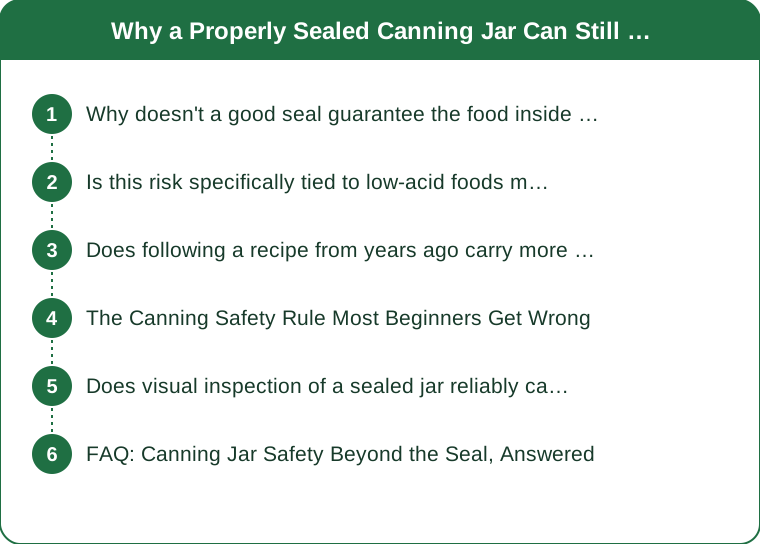
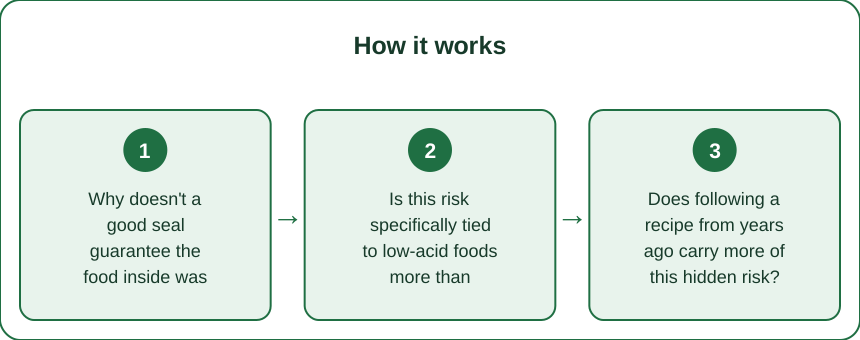
Why doesn’t a good seal guarantee the food inside was processed safely?
A seal forms when air is pushed out during processing and the lid vacuum-locks as the jar cools, which can happen correctly even if the processing time, temperature, or method used wasn’t sufficient to kill dangerous bacteria or spores for that specific food’s acidity level, meaning seal formation and content safety are two separate outcomes of the same process.
Is this risk specifically tied to low-acid foods more than high-acid ones?
Yes — low-acid foods like most vegetables and meats require pressure canning at specific temperatures to kill botulism spores, and using a simpler water bath method (which can still produce a good seal) on a low-acid food leaves those spores alive despite a perfectly sealed jar, which is the single most common source of this specific safety gap.
Does following a recipe from years ago carry more of this hidden risk?
Older, especially pre-1994 family recipes sometimes predate updated food safety research and processing time recommendations, and a recipe that produced a fine seal decades ago may not reflect current tested-safe processing times for that specific food and jar size, making it worth cross-checking older recipes against a current tested source.
The Canning Safety Rule Most Beginners Get Wrong
Assuming that any home canning method that produces a good seal is inherently safe is the single most common beginner misunderstanding — safety depends specifically on matching the correct processing method (water bath for high-acid, pressure canning for low-acid) and tested processing time to the exact food and jar size being used, not on seal quality alone.
Does visual inspection of a sealed jar reliably catch unsafe contents?
No — botulism toxin specifically often produces no visible sign, no off smell, and no obvious spoilage in an affected jar, which is exactly why correct processing method and time matter more than any visual or smell check performed after the fact.
FAQ: Canning Jar Safety Beyond the Seal, Answered
Where can a home canner find current tested-safe processing times?
University extension office canning guides and the USDA’s official canning guide provide current, tested processing times by food type and jar size, and are more reliable than older cookbooks or informally shared family recipes.
Does altitude affect processing time and therefore this safety question?
Yes — higher altitudes require longer processing times or adjusted pressure settings than sea-level recipes specify, and skipping this adjustment is another way a good seal can form on inadequately processed food.
Is reprocessing or refrigerating a sealed jar with an uncertain processing history a safe fix?
A jar with genuinely uncertain processing history is safer discarded than eaten, since reprocessing after the fact doesn’t reliably undo any spore survival, and refrigeration alone doesn’t kill botulism spores already present.
TL;DR:
- A jar seal confirms air was excluded, not that the processing method or time was correct for that food
- Low-acid foods processed with the wrong method are the most common source of this specific safety gap
- Botulism toxin often produces no visible sign in an affected jar, so seal quality and appearance aren’t reliable safety checks
- Matching food type to the correct tested processing method and time is what actually determines safety
A good seal is worth celebrating, but it answers a different question than ‘is this safe to eat’ — that answer comes from matching the right tested method to the right food, every time.
Keep Reading
This article is for general informational purposes only and is not medical advice. Always consult a qualified health professional for guidance specific to you.