Why a Canning Jar That Sealed Perfectly Can Still Be Unsafe to Eat Months Later
A satisfying pop when a canning lid seals feels like confirmation that a jar of preserved food is safe, but that seal only proves one specific thing happened correctly, and it’s not the same thing as the food inside actually being free of risk.
Why a Seal Only Proves the Absence of Air
The narrow proof: a-vacuum-seal-confirms-that-air-was-successfully-excluded-from-the-jar-during-processing-and-nothing-more-specific-than-that-single-mechanical-fact (a vacuum seal confirming only that air was successfully excluded from the jar during processing, and nothing more specific than that one mechanical fact about pressure and airtightness, per the canning-basics-safety-guide logic — a-vacuum-seal-confirming-only-that-air-was-successfully-excluded-from-the-jar-during-processing-and-nothing-more-specific-than-that-one-mechanical-fact), and the reframe (the seal being a pressure test, not a safety certificate)).
Why That Narrow Proof Gets Mistaken for a Guarantee
The overreach: certain-heat-resistant-bacterial-spores-can-survive-under-processing-that-still-produces-a-perfectly-normal-seal-so-the-satisfying-pop-gets-read-as-more-reassuring-than-it-actually-is (certain heat-resistant bacterial spores being able to survive under-processing that still produces a perfectly normal seal, so the satisfying pop of a sealed lid gets read by most people as far more reassuring than it actually is, per the home-canning-actual-safety-variable-guide logic — certain-heat-resistant-bacterial-spores-being-able-to-survive-under-processing-that-still-produces-a-perfectly-normal-seal-so-the-pop-gets-read-as-more-reassuring-than-it-actually-is), and the frame (a normal-sounding seal coexisting with a genuinely unsafe jar)).
How to Judge Jarred Food by Process and Time
The correction: follow-tested-processing-times-and-pressures-exactly-for-the-specific-food-and-jar-size-and-treat-that-process-not-the-seal-sound-as-the-actual-safety-marker (following tested processing times and pressures exactly for the specific food and jar size involved, and treating that documented process, not the seal sound, as the actual safety marker worth trusting, per the how-to-preserve-your-summer-harvest-guide logic — following-tested-processing-times-and-pressures-exactly-for-the-specific-food-and-jar-size-involved-and-treating-that-documented-process-not-the-seal-sound-as-the-actual-safety-marker), and the frame (safety being earned during processing, not confirmed afterward by a sound).
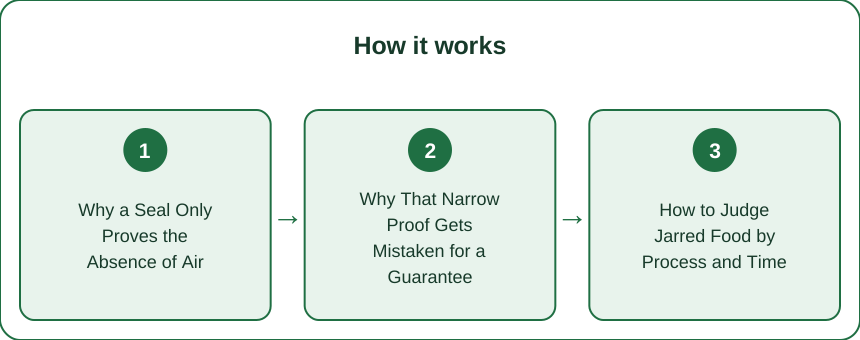
A vacuum seal confirms only that air was successfully excluded from the jar during processing, and nothing more, yet certain heat-resistant bacterial spores can survive under-processing that still produces a perfectly normal seal, so that satisfying pop gets read as far more reassuring than it actually is. Following tested processing times and pressures exactly for the specific food and jar size, and treating that documented process rather than the seal sound as the real safety marker, is what actually earns the safety a sealed jar seems to promise.
Keep Reading
This article is for general informational purposes only and is not medical advice. Always consult a qualified health professional for guidance specific to you.