Why Late-Summer Fruit Needs More Acid Than the Recipe Says
Quick Answer: As fruit ripens, its acid content falls and its sugar rises. Late-season fruit can be meaningfully less acidic than the slightly underripe fruit most tested recipes assume, which affects both safety in water-bath canning and pectin’s ability to set. Adding bottled lemon juice — 1 to 2 tablespoons per quart of fruit — corrects both, and bottled is the right choice because its acidity is standardized.
The peaches were perfect. Enormously ripe, dripping, the best of the year. The jam came out loose, and something about it tastes flat.
Ripeness is not a free upgrade in preserving. The same qualities that make late-August fruit wonderful to eat make it harder to set and less reliably acidic than the fruit a tested recipe was calibrated on.
Here is what changes as the season peaks, and the small correction that handles it.
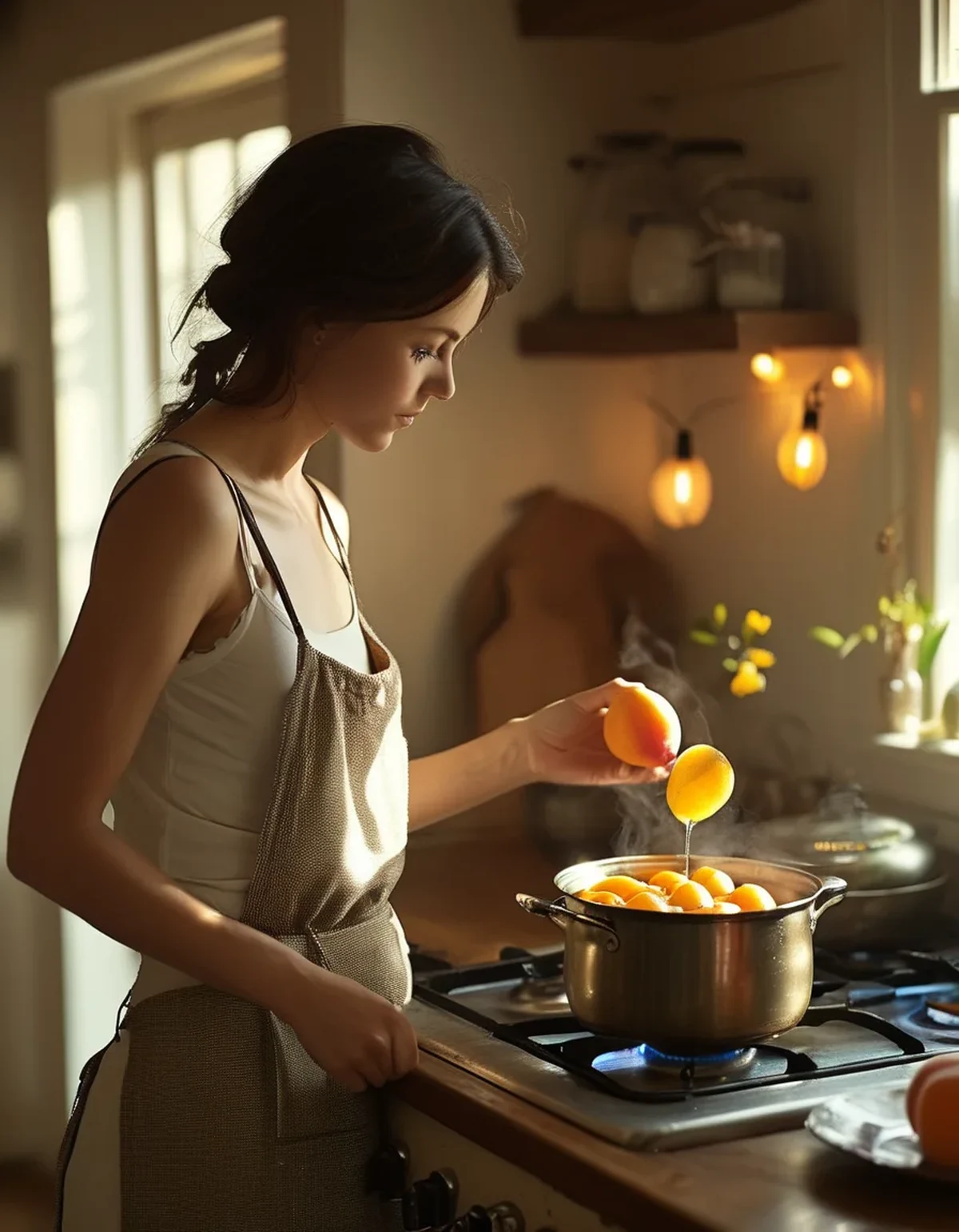
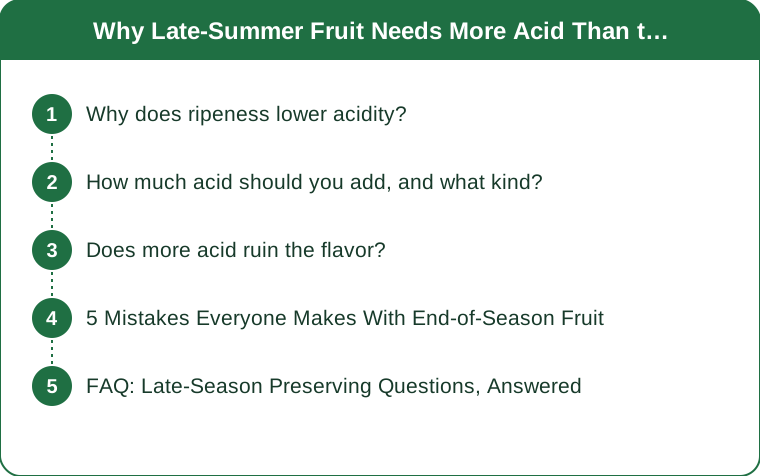
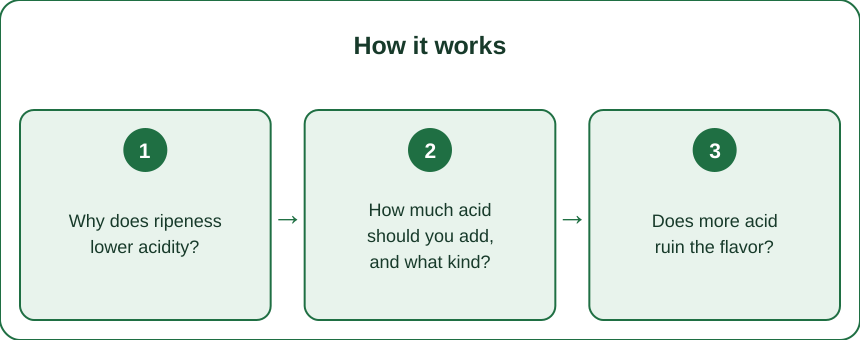
Why does ripeness lower acidity?
Because ripening is partly the process of consuming the fruit’s own acids.
The fruit metabolizes its acid. During ripening, organic acids — malic and citric, mostly — are broken down while sugars accumulate. That is the trade that makes ripe fruit taste sweet: less acid, more sugar, in the same piece of fruit.
pH rises measurably. Depending on variety and conditions, the same peach or plum can shift several tenths of a pH unit between firm-ripe and fully ripe. In water-bath canning, tenths of a pH unit are the whole safety margin.
Pectin needs acid to gel. Traditional pectin sets in the presence of sufficient acid and sugar. Low acid is one of the two most common reasons a jam refuses to set, and it is much more common at the end of the season.
Recipes assume a mix. Most tested preserving recipes specify slightly underripe to just-ripe fruit, often a blend, precisely because that gives predictable acid and pectin. Using entirely dead-ripe fruit puts you outside the tested assumption.
How much acid should you add, and what kind?
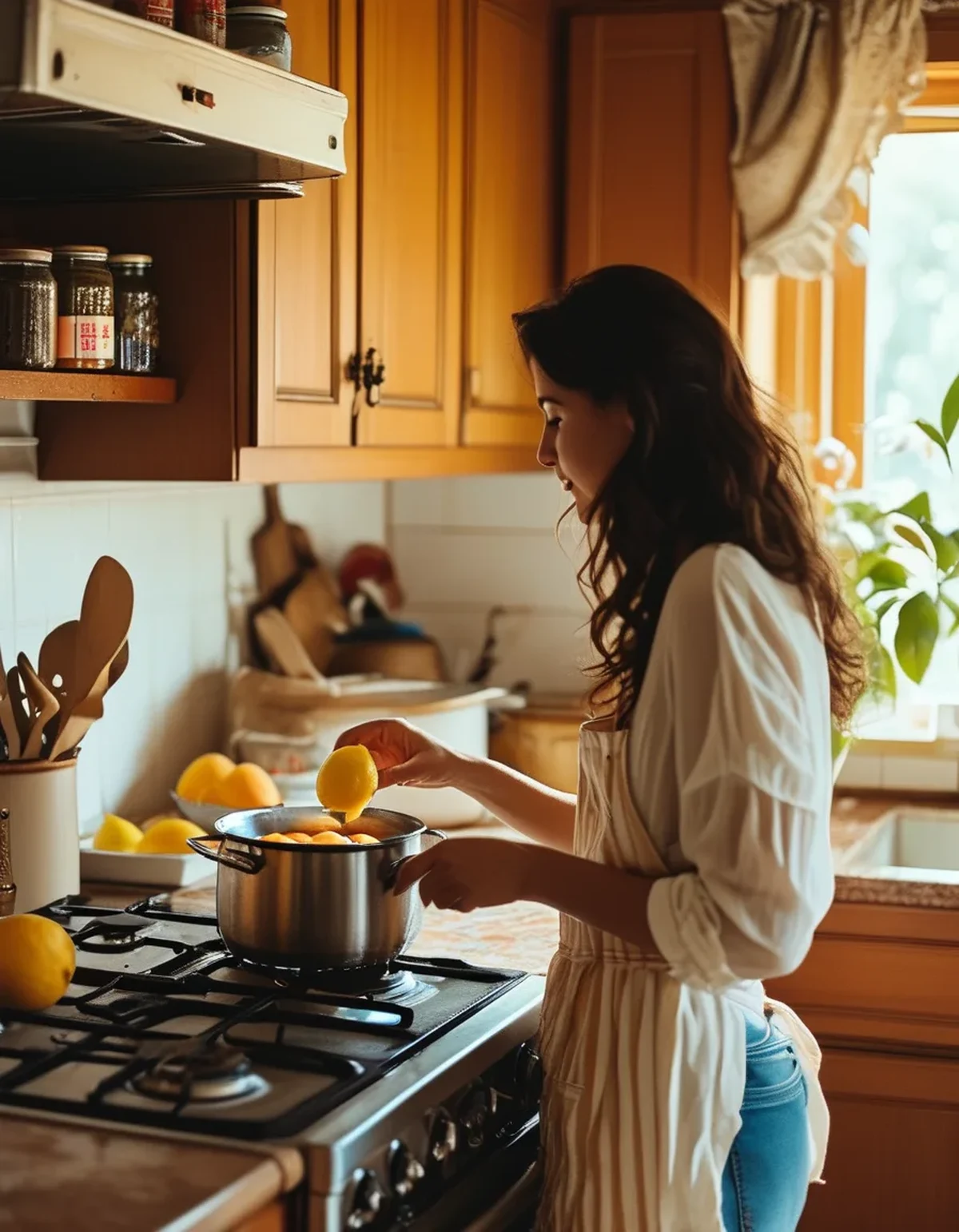
Bottled lemon juice, 1 to 2 tablespoons per quart of prepared fruit, is the standard correction.
Use bottled, not fresh. This is counterintuitive and it matters. Bottled lemon juice is standardized to a consistent acidity; fresh lemons vary considerably by variety, ripeness, and season. For a safety-relevant addition, consistency beats freshness.
Follow your tested recipe first. If the recipe already calls for added lemon juice or citric acid, use that amount — it was tested. The extra-acid discussion applies when you are working with notably riper fruit than specified.
Citric acid is an alternative. Roughly 1/4 teaspoon of citric acid substitutes for 1 tablespoon of bottled lemon juice. It is easier to store and contributes less flavor, which some people prefer in delicate fruit.
Add it early for jam, at the jar for tomatoes. For jam, adding acid before or during cooking helps pectin do its job. For canned tomatoes and similar, acid goes into the jar as directed by the tested recipe.
Do not exceed tested amounts by a lot. More acid is not indefinitely better — it changes taste and texture. The correction is a tablespoon or two, not a free hand.
Does more acid ruin the flavor?
Almost never at these amounts, and it usually improves it.
Flat is the giveaway. Preserves made from very ripe fruit often taste one-dimensionally sweet. That flatness is missing acid, and correcting it makes the fruit flavor read as more, not less, like itself.
Two tablespoons per quart is a small amount. In a batch with several cups of sugar, it registers as brightness rather than sourness. Most people, tasting side by side, prefer the corrected version.
Balance it with the sugar, not against it. If you are reducing sugar, you may want the acid at the higher end of the range, since sugar was contributing some of the perceived balance.
Citric acid is the neutral option. If you genuinely do not want any lemon note in a delicate fruit like white peach or pear, citric acid delivers the acidity with much less flavor of its own.
5 Mistakes Everyone Makes With End-of-Season Fruit
1. Using only the ripest fruit. It is tempting because it tastes best raw. Blend in some firm-ripe fruit for pectin and acid, or add acid to compensate. Entirely dead-ripe batches are the ones that do not set.
2. Assuming fresh lemon is a safe substitute. For flavor, fine. For the acidification step in a tested recipe, use bottled — the acidity of fresh lemons is genuinely variable.
3. Cooking longer to force a set. Extra boiling in a low-acid batch mostly darkens the color and dulls the flavor. The problem is chemistry, not time. Add acid, or add pectin, and stop overcooking.
4. Skipping the acid in tomatoes because these tomatoes taste tart. Perceived tartness tracks the sugar-acid ratio, not pH. A sweet-tasting tomato can be more acidic than a bland one. Always follow the tested acidification step.
5. Reducing sugar without adjusting anything else. Sugar contributes to set and to preservation. If you cut it, use a pectin designed for low sugar and expect to adjust acid as well — do not improvise with a traditional recipe.
This is general food-safety information. For water-bath and pressure canning, follow a current tested recipe from a reputable extension service or the USDA rather than adapting freely.
FAQ: Late-Season Preserving Questions, Answered
How can I tell if my fruit is too ripe for canning?
If it will not hold its shape when cut, gives no resistance to a fingertip, or is starting to ferment at the stem, it is past ideal for canning. It is still excellent for butters, syrups, or freezing — applications where set and structure matter less.
Can I test the pH at home?
Test strips give a rough indication but are not reliable enough to make a safety decision on. The correct approach is to follow a tested recipe and include the specified acidification, rather than measuring and improvising.
My jam did not set. Can I fix it?
Yes. Re-cook it in small batches with added pectin and lemon juice according to the pectin manufacturer’s remake directions. Do not simply re-boil it longer — you will get a darker, thinner jam. And a loose jam is still a very good sauce or syrup.
TL;DR:
- Ripening consumes the fruit’s own acid, so late-season fruit is sweeter, softer, and less acidic than most tested recipes assume.
- Lower acid affects both water-bath safety and pectin’s ability to set.
- Add bottled lemon juice, 1 to 2 tablespoons per quart of prepared fruit — bottled because its acidity is standardized.
- Citric acid, about 1/4 teaspoon per tablespoon of lemon juice, is a lower-flavor alternative.
- Blend in some firm-ripe fruit rather than using only the ripest, and never cook longer to force a set.
- Always follow a current tested recipe for the acidification step; do not improvise it.
Peak-season fruit is a genuine gift, but it needs a small correction to behave in a jar the way it does on a plate. Two tablespoons of bottled lemon juice is usually the whole difference between a flat, loose batch and the best preserve of the year.
Keep Reading
This article is for general informational purposes only and is not medical advice. Always consult a qualified health professional for guidance specific to you.