Why Homemade Pickles Turn Mushy Instead of Crisp — The Fix Most Recipes Skip
Quick Answer: Mushy pickles usually come from an enzyme in the cucumber’s blossom end that softens texture during fermentation or brining, combined with cucumbers that weren’t fresh enough or cold enough when pickled — trimming the blossom end and using very fresh, well-chilled cucumbers are the two changes that fix most crispness problems.
Most mushy-pickle problems trace back to two small prep steps that get skipped, not the actual pickling recipe itself.

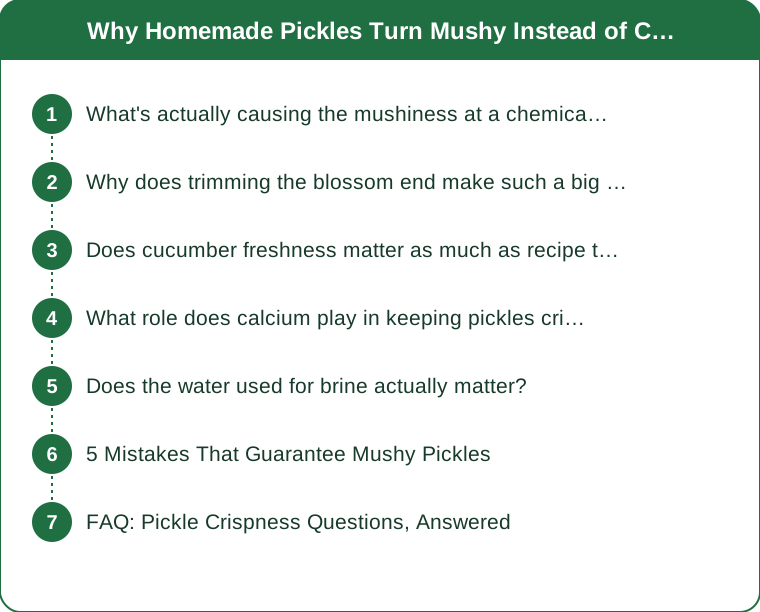
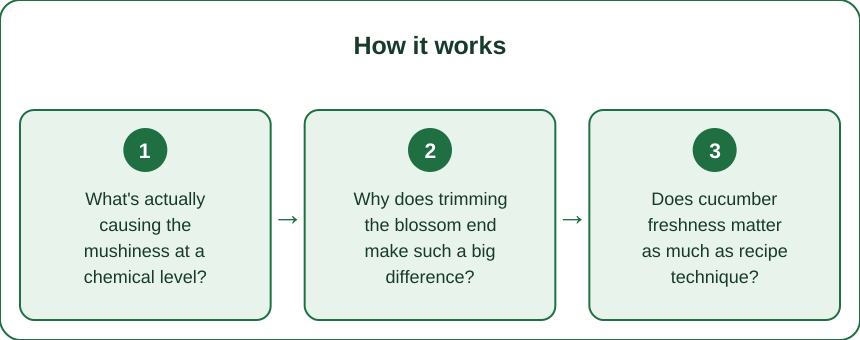
What’s actually causing the mushiness at a chemical level?
Cucumbers, especially the blossom end, contain an enzyme that breaks down pectin — the compound giving the cucumber its structural crunch. Left on during pickling, this enzyme keeps working in the brine, softening texture well beyond what fermentation or salt alone would cause.
Why does trimming the blossom end make such a big difference?
Cutting off about 1/16 to 1/8 inch from the blossom end removes most of the concentrated enzyme in that spot, which is the single highest-impact step most simple recipes leave out — it takes seconds per cucumber but meaningfully changes final texture.
Does cucumber freshness matter as much as recipe technique?
Enormously — cucumbers picked more than a day or two before pickling already start losing cell structure and moisture, and no amount of recipe adjustment fully compensates for starting with cucumbers that aren’t genuinely fresh and well-chilled.

What role does calcium play in keeping pickles crisp?
Calcium chloride or a small amount of pickling lime helps reinforce cell wall structure during pickling, which is why some crisp-pickle recipes call for it specifically — it’s a chemistry-based crispness aid rather than a flavor ingredient.
Does the water used for brine actually matter?
Yes, somewhat — soft or very mineral-rich tap water can subtly affect texture and fermentation, which is part of why many dedicated picklers prefer filtered water for consistent results, especially for fermented (not just vinegar) pickles.
5 Mistakes That Guarantee Mushy Pickles
- Skipping the blossom-end trim entirely.
- Using cucumbers that sat at room temperature for days before pickling.
- Overpacking the jar, preventing even brine contact.
- Using warm brine on warm cucumbers, accelerating enzyme activity before pickling even starts.
- Not adding a calcium or tannin source (like a grape or oak leaf) for fermented pickles specifically.
FAQ: Pickle Crispness Questions, Answered
Does adding a grape leaf to the jar actually help crispness?
Yes — grape, oak, or horseradish leaves contain tannins that help inhibit the softening enzyme, a traditional trick that has real chemical basis.
Can already-mushy pickles be saved?
Not really — once texture has broken down, it can’t be restored, though the pickles remain safe to eat, just softer.
Does refrigerator pickling avoid this issue entirely?
It reduces it somewhat since cold slows enzyme activity, but blossom-end trimming and fresh cucumbers still matter even for refrigerator pickles.
TL;DR:
- An enzyme concentrated in the blossom end is the main driver of pickle mushiness
- Trimming that end removes most of the problem in seconds per cucumber
- Cucumber freshness matters as much as any recipe adjustment
- Calcium chloride and tannin-rich leaves both help reinforce crisp texture
Next batch, trim the blossom end and use the freshest, coldest cucumbers you can find — those two changes alone typically solve most homemade pickle crispness complaints.
Keep Reading
This article is for general informational purposes only and is not medical advice. Always consult a qualified health professional for guidance specific to you.